
Handmade in Nepal · tree-free lokta
Nepali Traveler Journal
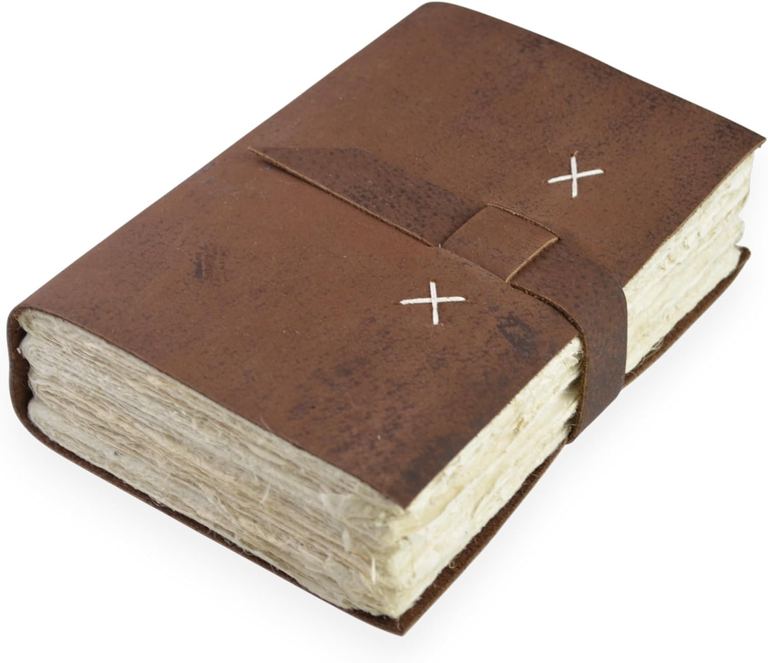
A wrap-around cover with a leather closure around 96 deckle-edged pages of handmade lokta — the paper that was carried down the Himalayan passes by donkey for a thousand years.
Vegetable-tanned buffalo leather · Heritage Deluxe lokta, 200 gsm
- Pages
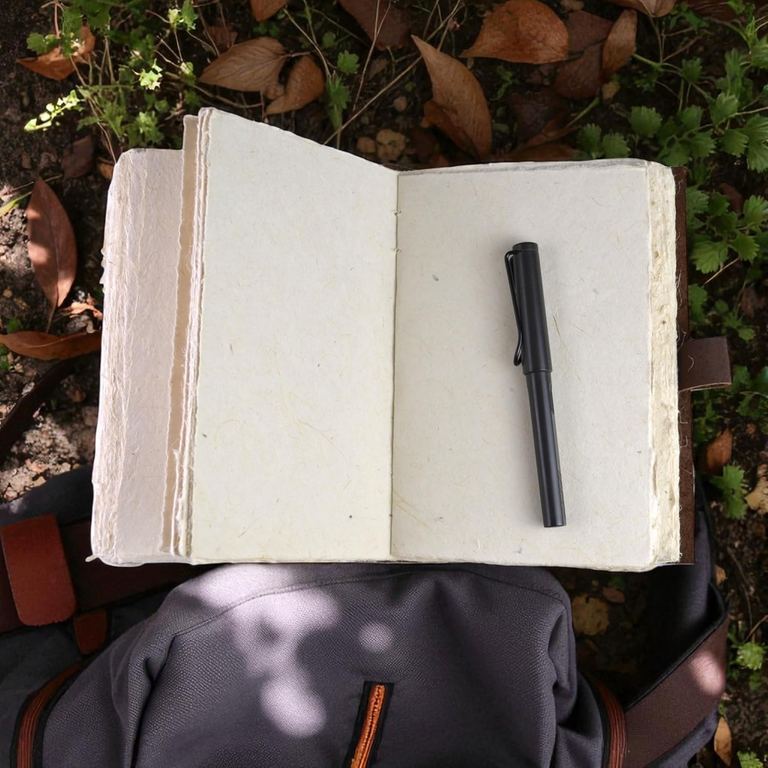
- 96 unlined pages (192 front/back), deckle-edged
- Paper
- Dark Walnut Heritage: Heritage Deluxe lokta, 200 gsm, made by the washi (Japanese paper) method so both sides are smooth. Nature's Wool: lokta paper, 80 gsm
- Pens
- Gel pens work great; ballpoint, pencil and fine-nib fountain pens too
- Cover
- Water buffalo leather, vegetable-tanned with black walnut husks — or undyed wool felt from Himalayan sheep
- Closure
- Leather tie strap
- Made in
- Nepal, following a 1,000-year-old tradition
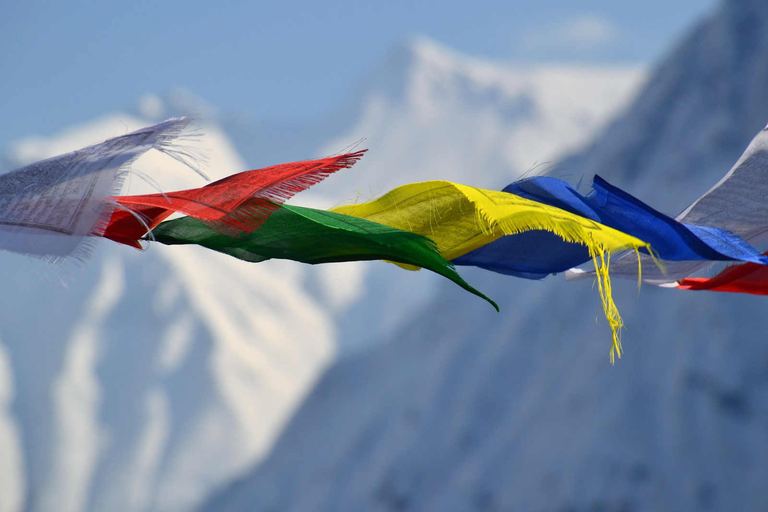
Prayer flags in the Himalayas
Ready for Any Adventure
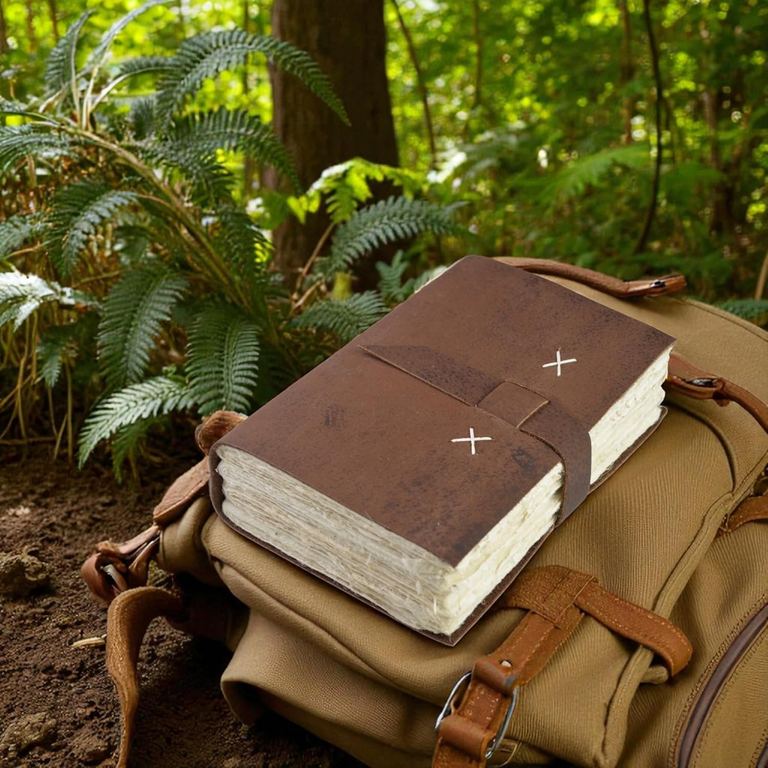
Big or small, the Nepali Traveler Journal is ready for any Adventure. Use it for sketching, journaling, prayer book, or notetaking at home or in the wild.
The journal comes in two editions:
- Dark Walnut Heritage with Extra Thick Pages
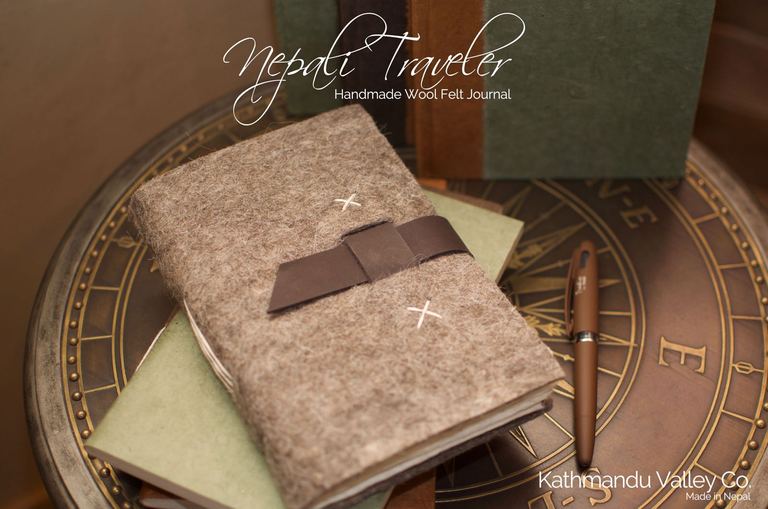
- Nature's Wool
Writing in it
Which pens work best?
Gel pens work great on lokta. Ballpoint, pencil and fountain pens with fine nibs are good too; very wet inks can feather on the 80 gsm pages.
How do the two papers differ?
The Heritage edition's 200 gsm paper is made by the washi method, so both sides are smooth and ink doesn't show through. The wool edition's 80 gsm lokta is the classic sheet: lighter, with the sun-kissed texture on one side.
Is every journal the same?
No. The leather is tanned with black walnut husks mixed by hand, and the felt blends wool from black and white sheep, so the shade of each cover is its own.
More about this journal
Begin the Adventure
Nepali Traveler Journal
The Nepali Traveler writing journal with tree-free Lokta paper follows a Nepalese paper-making tradition of over one thousand years.
Handcrafted in the Himalayas and used anciently for sacred texts, hand-made lokta paper has been a staple of Nepalese artisans for centuries.
The oldest surviving Lokta paper is a religious text, a copy of the Karanya Buha Sutra Buddhist text estimated to be 1,000 to 1,900 years old.
Our brand new Heritage Deluxe edition features our thickest paper in a journal at 200gsm, this journal is ready for any adventure.
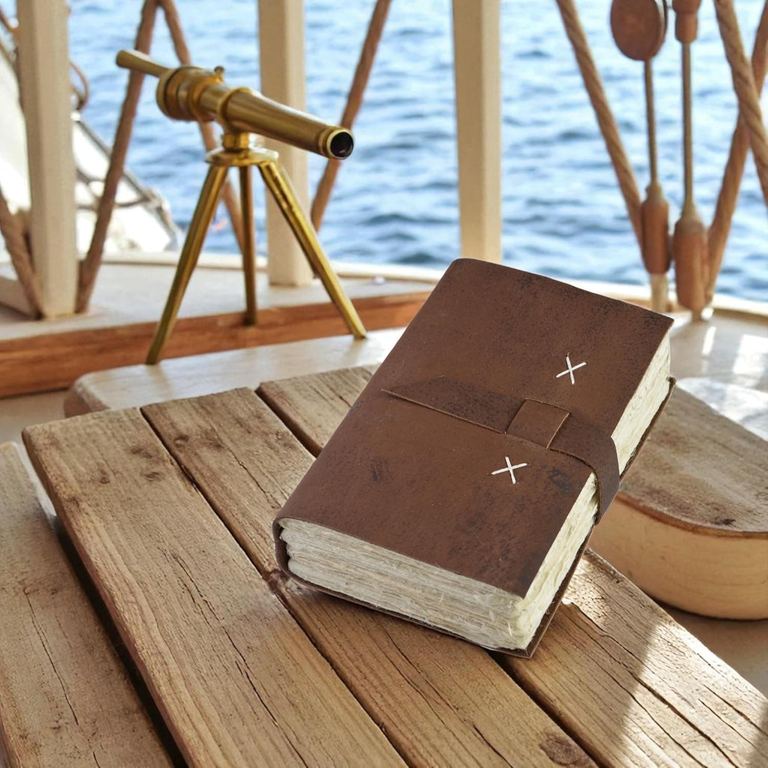
Tree-Free & Renewable
Paper from the Lokta Bush
The paper is made from lokta bushes which grow on the southern slopes of the Nepali Himalayas between 5,250 and 13,000 feet.
When properly cut, the bushes can produce three to eight new, fast-growing shoots making Lokta paper one of the most sought after non-tree papers.
Lokta paper is left unbleached, keeping the natural color of the lokta fibers.
Once cut, the inner bark of the Lokta bush is cooked into a mash to soften the fibers.
The mash is then hand applied to boxed screens and sun-dried in the rural, high altitude villages of Nepal.
The paper is then carried down the mountain by pack animals and is then assembled into the journal in Kathmandu, Nepal.
Naturally Beautiful
Beautiful & Unique Texture
Lokta paper has a beautiful texture containing natural flecks from the outer lokta bark and can vary slightly in thickness from page to page due to the unique handcrafting process.
The paper is acid-free and is widely regarded as one of the world’s finest hand-made papers.
The paper’s deckled edges (rough cut), and leather closure makes this journal an international favorite.
- Tree-Free Paper
- Lokta bushes grow on the southern slopes of the Himalayas of Nepal.
- 96 Pages (192 Front/Back)
- Traditional Deckle-edge pages (similar to rough cut) add to the vintage feel of every page.
- Bleach and Acid Free
- Modern papers are bleached to gain brightness, our paper is bleach free and acid-free and retains its natural color.
Now in Handmade Felt
Nature's Wool Edition
Made by hand, the wool felt comes from sheep raised in the Himalayas of Nepal.
Wool layers are placed by hand on top of each other and are washed with water and soap.
This helps the fibers of each layer to combine into a stiffened felt.
No dyes are used in the process. The finished gray color is made from combining wool from both black and white Himalayan sheep, creating a vintage feel to each journal.
- Renewable
- Lokta bushes regrow quickly after being cut, regaining full height in 5-7 years.
- Vegetable-Dyed
- Natural black walnut husks are used to tan the unique water buffalo leather.
View the Selection
Nepali Traveler Leather Journal
Include the Nepali Traveler Deluxe Heritage journal in your next adventure.
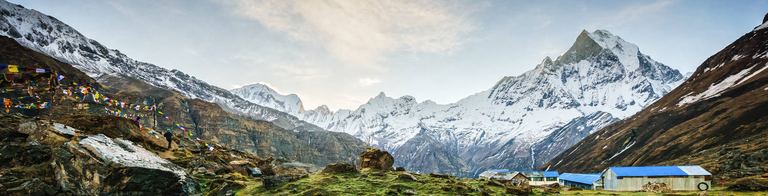
Machapuchare, the Fish Tail, from Annapurna Base Camp
Help Support Talented Nepalese Artisans
Thank you for helping to preserve a 1,000-year-old tradition in Nepali paper making and supporting the artisans that keep the tradition alive.